Scientists Grow “Mini-Me” Testicles in the Lab, and It’s a Big Deal


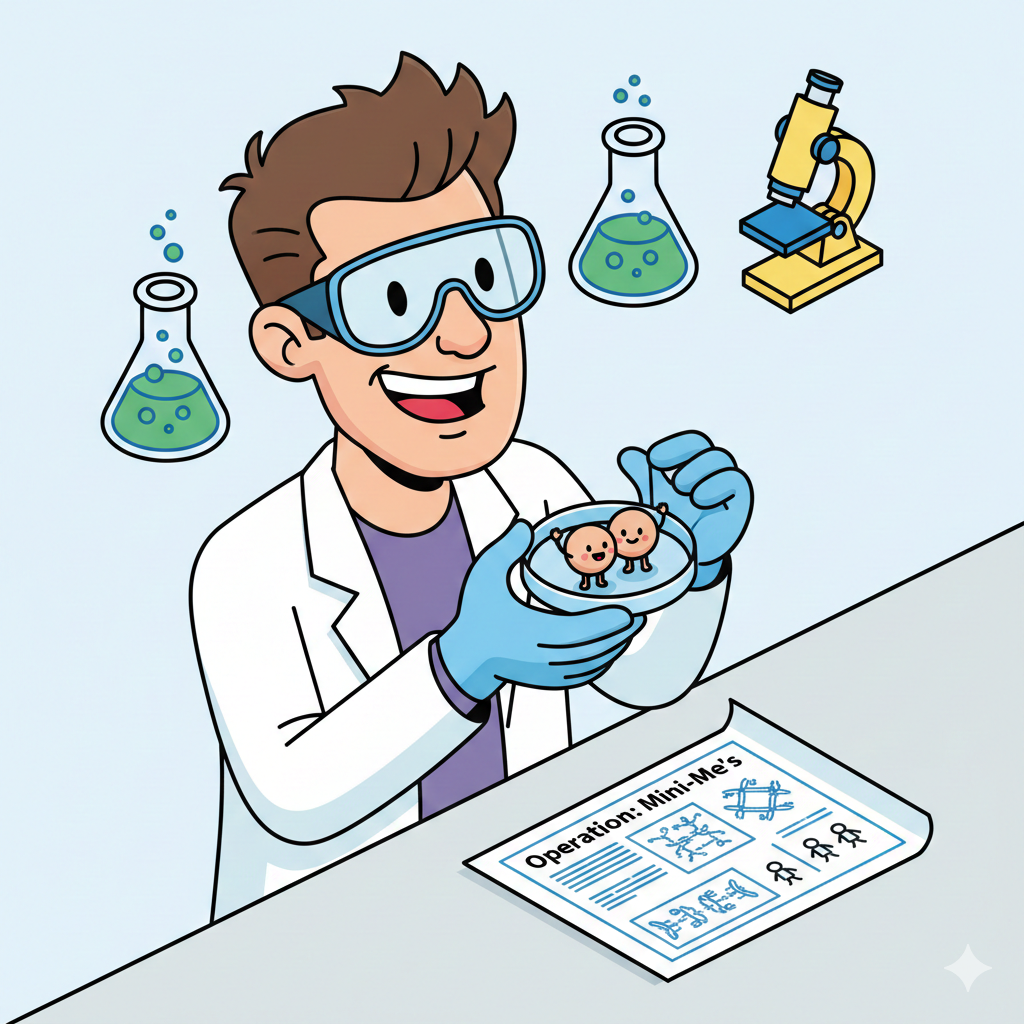
In a breakthrough that sounds like it’s straight out of a sci-fi comedy, researchers at Bar-Ilan University have successfully nurtured the first-ever lab-grown artificial testicles. Forget test tubes; welcome to the age of the testicle-tube.
The scientists created these tiny biological wonders, called “testis organoids,” using real mouse testicular cells. After carefully culturing them, the mini-organs began to organize themselves and even showed signs of reaching a stage just before sperm production.
So, why grow a pair in a petri dish? It’s not for creating a mouse-dating profile. This pioneering work is a game-changer for understanding and treating male infertility. These lab-grown models provide an ethical and effective way to study how the male reproductive system develops and functions, potentially leading to new treatments for millions.
The research also opens doors for understanding the effects of pharmaceuticals on male fertility and could one day offer solutions for children undergoing cancer treatment, potentially preserving their future ability to have children.
Lead researcher Dr. Nitzan Gonen summed it up: “This is a case where thinking small could lead to some very big outcomes for human health.” It seems the future of fertility research is looking up.
Related Post

GP Suspended for Adding His Own Semen to a Colleague’s CoffeeGP Suspended for Adding His Own Semen to a Colleague’s Coffee

A doctor from Wales has been suspended from the medical register after a tribunal found he contaminated a female colleague’s coffee with his own semen.

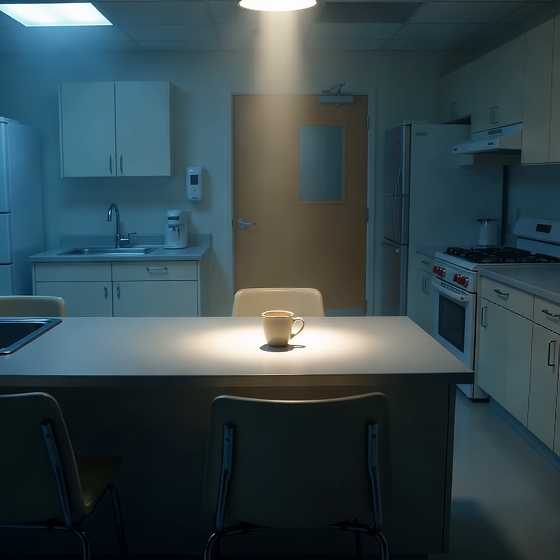
The incident involved Dr. Nicholas Chapman, 43, a general practitioner at the Cwmcarn Primary Surgery in Caerphilly county. The Medical Practitioners Tribunal Service (MPTS) heard that in August 2021, Dr. Chapman entered the staff kitchen and ejaculated into a travel mug belonging to a female GP colleague.

The victim reportedly drank from the mug and noticed an “unusual” taste and consistency. Suspicious, she discreetly secured the mug for forensic testing. The results confirmed the presence of semen, and DNA analysis later identified Dr. Chapman as the source.

Dr. Chapman denied the allegation, claiming he had only spat into the mug. However, the tribunal rejected this explanation as “implausible and untrue,” stating that his actions were “deplorable and a significant breach of trust.”

The tribunal concluded that Dr. Chapman’s actions were sexually motivated and amounted to misconduct. While they determined his fitness to practice was not currently impaired, they issued a six-month suspension, citing the need to maintain public confidence in the medical profession and declare such behaviour unacceptable. This suspension will be reviewed before it expires. The case has been reported to South Wales Police.

7.4 Million Brits Admit To Self-Pleasure At Work – Does It Boost Productivity?7.4 Million Brits Admit To Self-Pleasure At Work – Does It Boost Productivity?

A recent study has unveiled that a substantial 7.4 million individuals in the United Kingdom have engaged in self-pleasure during their working hours.

The advent of remote work has brought with it a range of perks, including the luxury of sleeping in, eliminating the daily commute, and, surprisingly for some Britons, the occasional moment of self-indulgence.

In a survey conducted by Chemist4U, involving 2,000 participants, a noteworthy 14 percent openly confessed to indulging in some personal gratification while on the job.

The survey findings indicate that more than a fifth of men (22 percent) have engaged in self-pleasure while working, while seven percent of women have also chosen to have some alone time during their workday. Furthermore, 18 percent of the surveyed individuals admitted to accessing adult content during work hours.

Notably, London emerged as the city with the highest prevalence of on-the-job self-stimulation, with 16 percent of respondents admitting to this practice.

The study also discovered that individuals earning between £35,001 and £45,000 annually were the most likely to engage in this behavior. Those earning between £25,001 and £35,000 per year exhibited a 24 percent likelihood, while those earning between £15,001 and £25,000 per year demonstrated an 18 percent likelihood.

The age group most frequently engaging in this activity was those aged 25 to 34, with 27 percent participating, followed by 35 to 44 year-olds at 18 percent, and 45 to 54 year-olds at 15 percent.

Surprisingly, experts suggest that engaging in self-stimulation during work hours may actually enhance productivity. Psychology lecturer Mark Sergeant from Nottingham Trent University asserted that this activity can improve concentration.

Psychologist and life coach Dr. Cliff Arnall even suggested the implementation of a ‘masturbation policy’ in workplaces to boost company morale. He expressed the belief that such a policy could result in increased focus, reduced aggression, heightened productivity, and improved employee well-being.

However, he cautioned that any such policy should have strict limitations, with a focus on ensuring that employees do not engage in inappropriate behavior or fantasize about their colleagues.

So, for those working from home, it appears that the occasional self-stimulation session might just be the perfect stress-reliever to add a little excitement to the workday, according to these findings.

Born Without An AnusBorn Without An Anus

A baby boy in Pakistan was born with an incredibly rare medical condition known as diphallia, which means he has two working penises but no anus. According to a team of researchers who published their findings in the International Journal of Surgery Case Reports, the chances of being born with this condition are one in six million. Diphallia can present as complete or incomplete and is often associated with complex urological, gastrointestinal, or anorectal malformations.

The abstract of the study revealed that the boy’s penises were both normal-shaped, with one being slightly larger than the other at 2.5 cm and 1.5 cm in length, respectively. The boy had two separate urethral orifices, and both phalluses had normal-shaped glans with urethral openings located in the typical position. He had a single scrotum with two midline raphe and well-formed rouge. The boy was passing urine from both orifices, and an ultrasonography of his urological system showed two ureters and a single hemi bladder.

After being admitted to the hospital, the baby boy underwent surgery, and a sigmoid-divided colostomy was constructed. During the operation, the doctors also identified a congenital pouch colon. To enable the baby to pass stools, the doctors created an opening via a colonoscopy.