
A New Beginning: The Story of the First U.S. Penis Transplant Patient


In a groundbreaking medical milestone, a team of surgeons at Massachusetts General Hospital has successfully performed the United States’ first penis transplant, offering a profound new hope for a patient whose life was irrevocably changed by cancer.
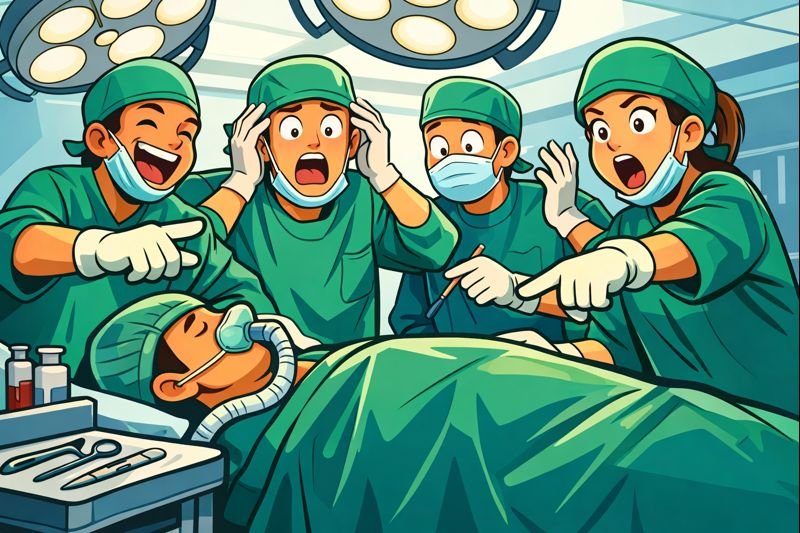
The recipient, a 64-year-old man from Halifax, Massachusetts, underwent a 15-hour procedure in mid-May. The transplant was not for erectile dysfunction, but to reconstruct his genitals after a life-saving surgery for advanced penile cancer several years prior. The amputation, while necessary, came at a significant psychological cost, leaving him with deep feelings of incompleteness and isolation.
“For this patient, it was about restoring a fundamental part of his identity,” explained Dr. Curtis Cetrulo, a leading member of the transplant team. “We are venturing beyond simply saving lives into the realm of restoring a sense of normalcy and wholeness.”
The procedure is exceptionally complex, requiring the meticulous reconnection of tiny nerves, blood vessels, and tissue from a deceased donor. The ultimate goal is for the patient to regain not only the physical appearance but also urination function and sexual sensation. The medical team is cautiously optimistic, citing the success of a similar, smaller-scale surgery performed in South Africa in 2014.
The patient, who has chosen to remain anonymous to protect his privacy, expressed immense gratitude. His hope is simple yet powerful: to one day regain a “normal life.” For him, success would mean the ability to urinate standing up and to feel whole again, both physically and emotionally.
This transplant represents more than a single patient’s journey; it opens a new frontier in reconstructive surgery. The team at Mass General believes this procedure could eventually help other men who have suffered severe genital trauma from accidents on the battlefield, car crashes, or other cancers.
The road to recovery is long, requiring extensive monitoring to prevent organ rejection and intensive physical therapy. But for the first man in the U.S. to undergo this pioneering procedure, it is a path he walks with renewed hope, symbolizing a powerful step toward healing the visible and invisible scars of disease.

Related Post

A Painful Parting GiftA Painful Parting Gift


A Pennsylvania man learned the hard way that some break-up tactics are truly un-balls-y when his girlfriend allegedly left him with a uniquely sensitive injury.
The incident unfolded during a heated argument that escalated beyond shouting. Instead of slamming a door, the woman reportedly opted for a more direct—and excruciatingly personal—method of expressing her displeasure. In a move that redefines “low blow,” she allegedly grabbed and tore the man’s scrotum, causing a significant laceration that left one of his testicles exposed and bleeding.
The man was promptly rushed to a local hospital, where medical staff confirmed the grim details. He was treated for the severe tear and, after what must have been an exceptionally uncomfortable procedure, was listed in stable condition.
Local police have since filed aggravated assault charges against the girlfriend. While the argument’s original cause remains under wraps, the result is a stark reminder that when it comes to relationship disputes, it’s best to keep your hands—and other body parts—to yourself.

Ol’ Whistlin’ ScrotOl’ Whistlin’ Scrot

An Ohio man faced a terrifying ordeal when he heard strange noises coming from his genital area. The 72-year-old, who remains unidentified, has been diagnosed with a unique medical condition known as a “whistling scrotum,” according to a new study published in the American Journal of Case Reports.

The man sought emergency medical attention as he was short of breath with a swollen face. An X-ray revealed excessive air in his body, which caused his lungs to collapse. If left untreated, this could have resulted in permanent damage to his heart and lungs, potentially leading to death. Doctors discovered that an open wound on the left side of his scrotum, leftover from testicle surgery, was the source of the strange whistling noise. The wound allowed trapped air to escape, causing his pneumoscrotum condition.

The man’s condition worsened, and he was transferred to another hospital for further treatment. He had two plastic tubes inserted into his chest to drain the excess air. After three days, his lungs had recovered, and he was released from the hospital. However, he still had air trapped in his scrotum and abdomen for an unusually long period of two years. The doctors were eventually forced to remove both testicles to resolve the issue.

Pneumoscrotum is a rare medical condition that occurs when air becomes trapped in the scrotum. Only 60 cases of this condition have been described in medical literature. Since the trapped air cannot escape through the body’s orifices, medical intervention is usually required. It is uncertain whether the man’s condition improved due to the “escape route” caused by the open wound. The study concluded that the pneumoscrotum was likely caused by penetrating injuries.

Thousands of Smuggled Donkey Penises Seized in Nigeria Amid Surging Demand and Declining PopulationThousands of Smuggled Donkey Penises Seized in Nigeria Amid Surging Demand and Declining Population

Nigerian officials made a startling discovery in the north-central city of Kontagora last week – thousands of dried donkey penises being smuggled out of the country. The donkey parts were found hidden in a truck headed to Hong Kong, where they are highly valued for use in traditional Chinese medicine.

This massive seizure sheds light on a booming and sinister trade that has wreaked havoc on Nigeria’s donkey population. As demand for donkey skins and body parts has skyrocketed in China in recent years, Nigerian donkeys have been slaughtered by the millions to feed this illicit industry.

Conservationists warn that unchecked, this rapidly growing trade could spell extinction for Nigerian donkeys. Already, the country’s donkey population has plunged from around 3 million in 2016 to just 800,000 today as smugglers try to cash in.

In an effort to halt this alarming decline, Nigeria banned the export and slaughter of donkeys in 2016. However, international criminal networks have continued the brutal trade by smuggling donkey parts out of the country to meet surging demand in China.

The recent seizure of over 3,000 donkey penises was a major bust by Nigerian authorities trying to crack down on this cruel and illegal trade. Officials warned that smugglers caught with donkey parts will face arrest and prosecution as the government continues its fight to protect the nation’s donkeys.

For now, the confiscated donkey penises are set to be destroyed, preventing them from reaching buyers in Hong Kong. But the bigger challenge remains ending the shadowy transnational networks that drive the intense hunting of Nigerian donkeys and the horrors of the illicit donkey skin trade.