Month: March 2026

City Pays $15 Million After Police Encounter Goes Shockingly AwryCity Pays $15 Million After Police Encounter Goes Shockingly Awry


In a settlement that underscores the extreme consequences of police tactics, a city has agreed to pay $15 million to a protester who suffered a devastating injury when a police projectile ruptured one of his testicles.
The incident occurred during a period of civil unrest. The man, participating in a protest, was struck by a less-lethal round fired by an officer. The impact did not just cause a severe bruise; the force was so significant that it caused one of his testicles to explode, requiring immediate surgical removal.
The graphic nature of the injury became a central point in the subsequent lawsuit, which accused the city and its police department of excessive force. After years of legal battle, the city council voted to approve the massive settlement to avoid a trial.
While the financial compensation is substantial, the plaintiff’s attorneys emphasized that no amount of money can undo the permanent physical and emotional trauma their client endured. The case serves as a stark, and frankly shocking, reminder of the potential for life-altering injury inherent in certain police crowd-control methods.
Scientists Grow “Mini-Me” Testicles in the Lab, and It’s a Big DealScientists Grow “Mini-Me” Testicles in the Lab, and It’s a Big Deal


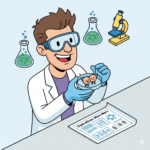
In a breakthrough that sounds like it’s straight out of a sci-fi comedy, researchers at Bar-Ilan University have successfully nurtured the first-ever lab-grown artificial testicles. Forget test tubes; welcome to the age of the testicle-tube.
The scientists created these tiny biological wonders, called “testis organoids,” using real mouse testicular cells. After carefully culturing them, the mini-organs began to organize themselves and even showed signs of reaching a stage just before sperm production.
So, why grow a pair in a petri dish? It’s not for creating a mouse-dating profile. This pioneering work is a game-changer for understanding and treating male infertility. These lab-grown models provide an ethical and effective way to study how the male reproductive system develops and functions, potentially leading to new treatments for millions.
The research also opens doors for understanding the effects of pharmaceuticals on male fertility and could one day offer solutions for children undergoing cancer treatment, potentially preserving their future ability to have children.
Lead researcher Dr. Nitzan Gonen summed it up: “This is a case where thinking small could lead to some very big outcomes for human health.” It seems the future of fertility research is looking up.

Penis-Gate: Ski Jumping’s Unusual Quest for AerodynamicsPenis-Gate: Ski Jumping’s Unusual Quest for Aerodynamics

The world of elite ski jumping is soaring to new heights, but a scandal dubbed “Penis-Gate” has officials scrambling to keep things grounded. A new wave of controversy suggests that some athletes may be engaging in highly unorthodox methods to gain an aerodynamic edge: manually adjusting their genitals before a jump.
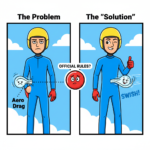
The issue centers on a lesser-known piece of equipment: the humble “speed suit.” These full-body suits are designed to be incredibly tight, minimizing air resistance as athletes fly down the in-run at speeds exceeding 60 mph. However, the smooth, seamless surface intended for optimal airflow can be compromised by, well, anatomical protrusions.
While regulations allow for protective cups in other sports like ski cross, their use is reportedly uncommon in ski jumping due to the potential for creating unwanted drag. This has allegedly led to a peculiar form of pre-jump preparation among some male competitors.
The Allegations Take Flight
Insiders claim that a subtle “tucking” or repositioning maneuver has become a covert tactic to ensure a completely flat profile under the suit. The goal is simple physics: a smoother surface equals less wind resistance, which can translate to precious extra centimeters of distance on the landing hill.
The International Ski Federation (FIS) is now facing calls for clarity. While the rules strictly govern suit material, thickness, and even how much the suit can “stand away” from the body at certain points, they are seemingly silent on the subject of anatomical optimization. This grey area has created a heated debate over what constitutes a fair advantage versus an illicit manipulation of equipment—even if that “equipment” is biological.
A Bizarre Twist in Sports Science
The scandal adds a bizarre new chapter to the sport’s relentless pursuit of aerodynamics, where athletes have long perfected their “V-style” body position to act like a wing. “Penis-Gate” pushes the limits of sports science into uncomfortably personal territory.
For now, the FIS has not announced any formal investigations, leaving athletes and fans suspended in a state of bemusement. As one official quipped, it’s a sensitive issue that’s proving difficult to get a handle on. The world will be watching the next competition closely, perhaps wondering not just about the style of the jump, but what subtle preparations made it possible.

Got Tension? Apes Have a Surprisingly Chill SolutionGot Tension? Apes Have a Surprisingly Chill Solution

Forget meditation apps or stress balls – our closest primate relatives have developed a much more direct, if unconventional, method for keeping the peace. New research reveals that chimpanzees and bonobos ease social tension by engaging in a behavior you won’t find in any corporate HR manual: rubbing each other’s genitals.
The study, observing groups of our great ape cousins, found that this unique form of social grooming isn’t about romance or dominance. Instead, it functions as a crucial “social tool.” After a conflict or during a moment of high tension, one ape might approach another and gently rub their genitalia. The result? A noticeable decrease in stress and a quick return to harmony within the group.
Scientists believe this behavior helps to reinforce social bonds and reassure group members, especially in situations where competition for food or mates might otherwise lead to aggression. It’s a natural, non-violent way to say, “We’re cool,” strengthening the social fabric of their communities.
So, while humans might offer a handshake or an awkward pat on the back, chimps and bonobos have a more intimate approach to conflict resolution. It just goes to show that in the complex world of primate politics, sometimes the best solution is a simple, reassuring gesture.

Religious Leader Claims Beards Are a Moral Safeguard Against ‘Indecent Thoughts’Religious Leader Claims Beards Are a Moral Safeguard Against ‘Indecent Thoughts’

A religious leader has sparked debate by stating that men who are clean-shaven may inadvertently cause “sinful and indecent thoughts” in others, arguing that facial hair is a God-given feature meant to distinguish gender and promote modesty.
The comments were made by Pastor Gary Mooibroek of the Reformed Congregation in the Netherlands. In a sermon, he suggested that a beard serves as a natural barrier to immoral thinking. He posited that the act of shaving removes a divine distinction between men and women, potentially leading to confusion and temptation.
“God gave men beards for a reason,” Mooibroek stated. “It is a clear sign that he is a man. When a man shaves his beard, he removes that sign. This can lead to sinful thoughts, because the clear distinction is blurred.”
The sermon, which circulated online, has drawn a mix of reactions. Some within his congregation have supported the view, seeing it as an extension of their faith’s emphasis on clear gender roles and modest appearance. However, critics have labeled the remarks as archaic and potentially harmful, arguing that they promote superficial judgments and place an unreasonable burden of responsibility on men for the thoughts of others.
This is not the first time conservative religious interpretations of appearance have made headlines. Similar discussions have arisen regarding standards of dress for women. Mooibroek’s comments highlight the ongoing tension between traditional religious beliefs concerning physical appearance and modern societal norms.