AUSTIN, Texas – A Travis County judge has sentenced 28-year-old Gabriel Brown to five years of probation for a 2021 assault that left a woman with a broken leg after she confronted him for indecent exposure.
The incident occurred when the victim discovered Brown masturbating outside her ground-floor apartment window. Upon confrontation, Brown chased the woman, causing her to fall and sustain a serious leg fracture.
In addition to probation, District Court Judge Brenda Kennedy ordered Brown to register as a sex offender and complete a sex offender treatment program. The Travis County District Attorney’s Office confirmed that prosecutors had sought a prison sentence, but acknowledged the court’s decision fell within the sentencing guidelines for the charges brought against Brown.
The case has concluded with heightened scrutiny on the application of probation in offenses involving violence and sexual misconduct.
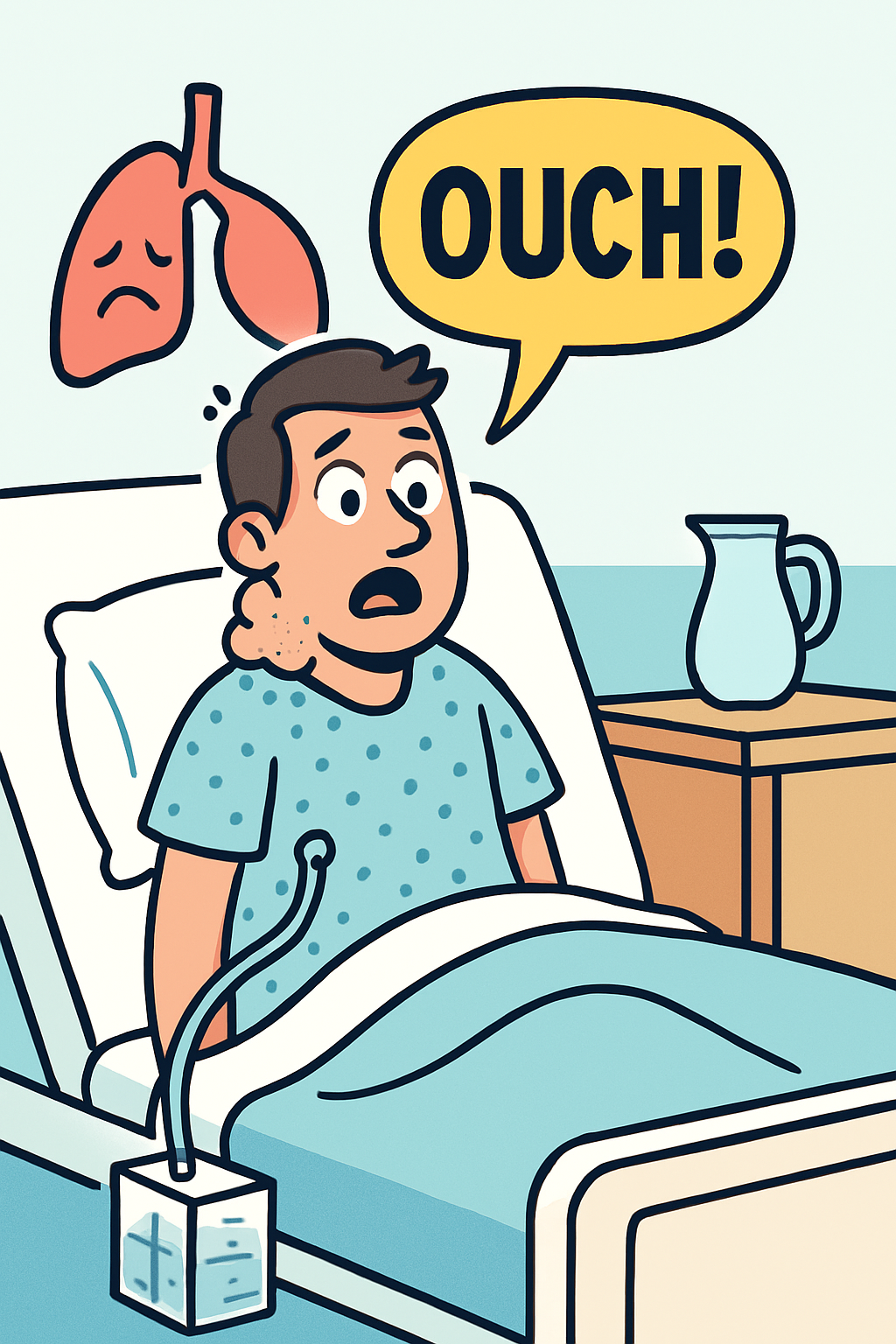
In a bizarre medical case that highlights the unexpected risks of everyday activities, a 54-year-old man was rushed to the emergency room after suffering a severe lung injury while masturbating.
The incident, documented in the Canadian Medical Association Journal (CMAJ), began when the man, feeling a sneeze building, attempted to stifle it by pinching his nose and closing his mouth—a maneuver known as a “valsalva maneuver.” However, he performed this action while simultaneously straining during masturbation.
This combination of forceful bodily actions created a perfect storm of internal pressure. The pressure build-up was so intense that it caused his lung to spontaneously collapse—a condition medically known as a “pneumothorax.” The man arrived at the hospital complaining of sharp chest pains, a swollen neck, and difficulty swallowing.
Doctors quickly identified the issue: not only had his lung collapsed, but air had leaked into the space between his lungs and chest wall, and even into the deep tissues of his neck. This condition, called “subcutaneous emphysema,” was the cause of the unusual swelling.
Fortunately, the treatment was straightforward. Doctors inserted a chest tube to re-inflate his lung, a procedure that was successful. After a brief hospital stay for observation, the man made a full recovery.
The case serves as a stark reminder from physicians that holding your breath during strenuous activities, whether lifting weights or during moments of intense physical exertion, can be dangerously stressful on the body. While the circumstances are rare, the underlying principle is a crucial one: the body’s internal systems are not designed to withstand such sudden, high-pressure events.
On Friday, pictures of Harvey Weinstein’s genitalia were shown to the jury in his Los Angeles sex crimes trial.
The pictures were remembered for an envelope of other photographs and reports introduced to the 12-part jury in a confidential room at Los Angeles Predominant Court.
In Weinstein’s trial for 11 counts of rape and sexual assault against five women between 2003 and 2014, the collection of documents was included as an exhibit.
The private parts of the convicted pervert are the focus of Weinstein’s most recent trial.
According to prosecutors, the disgraced film producer had surgery in 1999 to treat Fournier’s Gangrene, which left him with scarring and changes in his genitalia. Specialists eliminated a portion of Weinstein’s scrotum and put them into his thighs.
Deputy District Attorney Paul Thompson stated on Monday that that surgery left pretty obvious scars, which you can see in the pictures.
On Friday, pictures of Harvey Weinstein’s genitalia were shown to the jury in his Los Angeles sex crimes trial.
The pictures were remembered for an envelope of other photographs and reports introduced to the 12-part jury in a confidential room at Los Angeles Unrivaled Court.
In Weinstein’s trial for 11 counts of rape and sexual assault against five women between 2003 and 2014, the collection of documents was included as an exhibit.
The private parts of the convicted pervert are the focus of Weinstein’s most recent trial.
According to prosecutors, the disgraced film producer had surgery in 1999 to treat Fournier’s Gangrene, which left him with scarring and changes in his genitalia. Specialists eliminated a portion of Weinstein’s scrotum and set them into his thighs.
Deputy District Attorney Paul Thompson stated on Monday that that surgery left pretty obvious scars, which you can see in the pictures.
A Dirty Dancing 2 actress testified that Weinstein masturbated on her face in 2003 while his assistant waited outside a hotel room after demanding she give him a naked massage. The images were shown just one day later.
The 22-year-old woman claimed that Weinstein pushed her onto the bed, but she never saw his genitalia.
A 20-year-old woman from Northwest Indiana was arrested on Tuesday for allegedly violently pulling a man’s penis. Police were called to the 700 block of Dearborn Road in Portage Township just before 7:15 p.m. on a battery report. The caller, a 26-year-old man from Valparaiso, reported that he was in a verbal argument with Zephanie Pennywell in the kitchen when she chased him, grabbed his shirt, and then grabbed his penis in a violent manner, refusing to let go and starting to pull. A roommate provided video footage of the incident, which showed Pennywell charging the man and grabbing his groin area for a brief period. Later, she was apprehended at a bar on the 300 block of U.S. Route 6. Pennywell claimed that she warned the man to stop provoking her and that the next person who annoyed her would be “d***ed.” She admitted to grabbing the man’s penis in an effort to harm him after failing to punch him in the crotch. Pennywell has been charged with battery.