Pakistani man needs 18 cm long electrical wire pulled out of his penis after it got stuck during DIY attempt to help him urinate

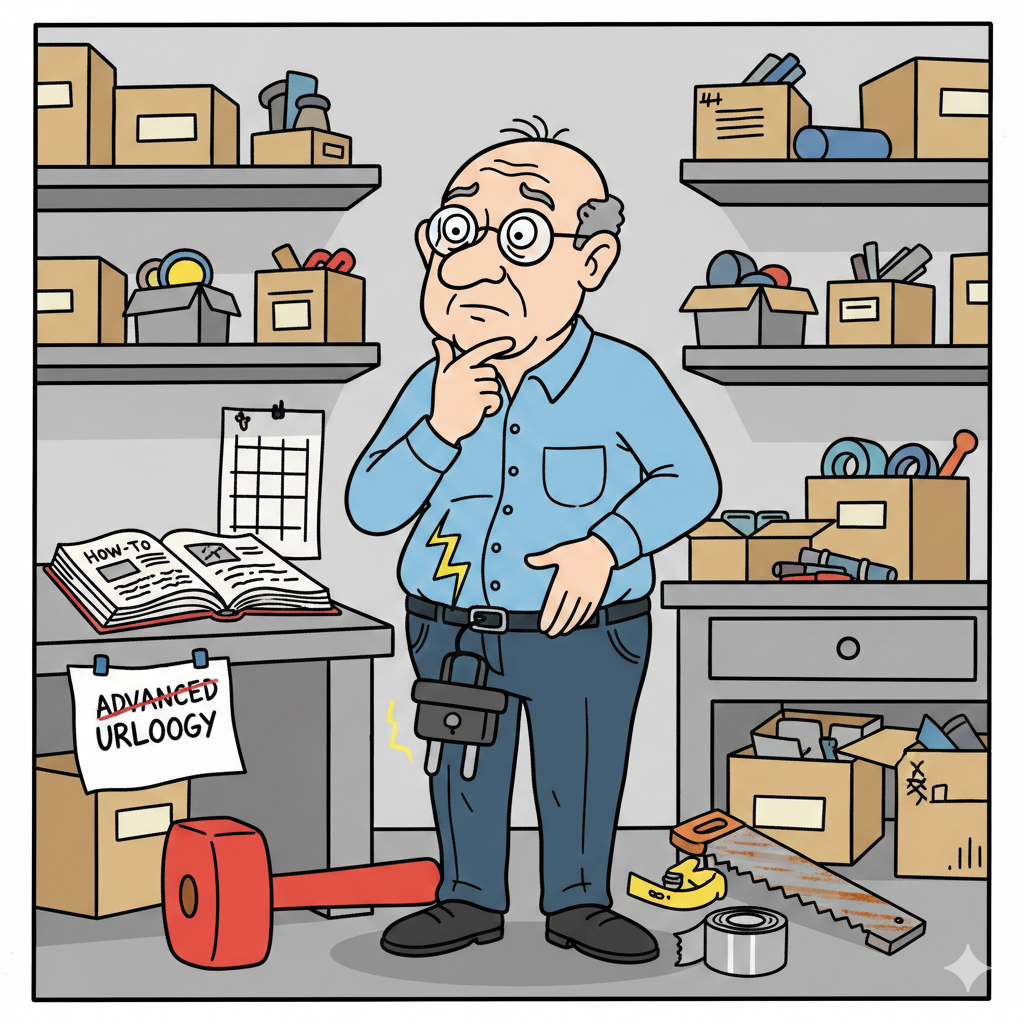
A 64-year-old Pakistani man needs an 18-centimeter electrical wire pulled out of his penis because it got stuck in his urethra during a DIY attempt to help him urinate. The Pakistani man shoved the 18-centimeter wire into his urethra, but it got stuck.

He told the doctors who treated him at Karachi’s Abbasi Shaheed Hospital that he had put in the object to help him urinate.The unidentified man informed them that prior to inserting the wire inside himself, he had been experiencing pain and having trouble urinating for two months.
Doctors wrote in the journal Urology Case Reports that when they touched the wire in his penis, they could actually feel it.

An X-ray revealed that the wire had reached the man’s bladder all the way up his urethra.To examine the wire, surgeons had planned to insert a camera into the man’s urethra.

On the other hand, when he spread his meatus, they could see the hole through which urine flows.

The doctor then used forceps to manually remove the object.

This X-ray shows that the man’s wire is inside his urethra and extends all the way to his bladder. The doctor was able to use forceps to grab the tip of the wire and pull it back out of his penis. The doctor said the patient didn’t have any bleeding or injury after the wire was removed.

The authors did not specify whether the man in the most recent case had ever done so before or if it was a one-time occurrence.
They also didn’t say exactly when this happened or explain why the man was having trouble urinating in the first place.

However, they claimed that the man had not had a sexual encounter in three years.
Related Post

A Keen Nose for Justice: North Wales Police Welcomes Viking, a Unique New Asset in the Fight Against Sexual CrimeA Keen Nose for Justice: North Wales Police Welcomes Viking, a Unique New Asset in the Fight Against Sexual Crime


In a significant boost to its investigative capabilities, North Wales Police has introduced a powerful new tool to its specialist units: a two-year-old Springer Spaniel named Viking. However, Viking isn’t a typical police dog; he is one of only a few in the UK specially trained to perform Non-Hazardous Sexual Crime Scene Searches.
Following an intensive 14-week training course, Viking and his handler, PC Ellen Wright, have joined the force’s respected Dogs Unit. Viking’s unique skill set allows him to locate crucial evidence, such as seminal fluid, in challenging environments where it might otherwise go undetected. His sensitive nose can find minute samples on a variety of surfaces, from clothing to digital devices, without compromising the integrity of the evidence.
“Viking’s introduction is a game-changer for investigating serious sexual offences,” said PC Wright. “His ability to pinpoint specific biological evidence will greatly assist our investigators, ensuring vital forensic material is collected efficiently and effectively. This not only strengthens our cases but, most importantly, helps us seek justice for victims.”
The deployment of a dog like Viking offers several advantages. It can accelerate the initial search phase of an investigation, allowing forensic teams to focus their analysis more precisely. This can lead to faster suspect identification and relieve some of the anxiety for victims awaiting developments in their cases.
Inspector Duncan Thomas of the Force’s Dogs Unit highlighted the strategic importance of this addition. “The Dogs Unit continually evolves to meet policing needs. Viking brings a rare and highly targeted capability to North Wales. His success during training was outstanding, and we are confident he will make a substantial difference in supporting some of our most vulnerable victims.”
Viking’s role exemplifies the innovative approaches modern police forces are adopting. By leveraging the unique abilities of animals, North Wales Police aims to enhance its forensic capabilities and build stronger, more robust cases against perpetrators of sexual crime.

7.4 Million Brits Admit To Self-Pleasure At Work – Does It Boost Productivity?7.4 Million Brits Admit To Self-Pleasure At Work – Does It Boost Productivity?

A recent study has unveiled that a substantial 7.4 million individuals in the United Kingdom have engaged in self-pleasure during their working hours.

The advent of remote work has brought with it a range of perks, including the luxury of sleeping in, eliminating the daily commute, and, surprisingly for some Britons, the occasional moment of self-indulgence.

In a survey conducted by Chemist4U, involving 2,000 participants, a noteworthy 14 percent openly confessed to indulging in some personal gratification while on the job.

The survey findings indicate that more than a fifth of men (22 percent) have engaged in self-pleasure while working, while seven percent of women have also chosen to have some alone time during their workday. Furthermore, 18 percent of the surveyed individuals admitted to accessing adult content during work hours.

Notably, London emerged as the city with the highest prevalence of on-the-job self-stimulation, with 16 percent of respondents admitting to this practice.

The study also discovered that individuals earning between £35,001 and £45,000 annually were the most likely to engage in this behavior. Those earning between £25,001 and £35,000 per year exhibited a 24 percent likelihood, while those earning between £15,001 and £25,000 per year demonstrated an 18 percent likelihood.

The age group most frequently engaging in this activity was those aged 25 to 34, with 27 percent participating, followed by 35 to 44 year-olds at 18 percent, and 45 to 54 year-olds at 15 percent.

Surprisingly, experts suggest that engaging in self-stimulation during work hours may actually enhance productivity. Psychology lecturer Mark Sergeant from Nottingham Trent University asserted that this activity can improve concentration.

Psychologist and life coach Dr. Cliff Arnall even suggested the implementation of a ‘masturbation policy’ in workplaces to boost company morale. He expressed the belief that such a policy could result in increased focus, reduced aggression, heightened productivity, and improved employee well-being.

However, he cautioned that any such policy should have strict limitations, with a focus on ensuring that employees do not engage in inappropriate behavior or fantasize about their colleagues.

So, for those working from home, it appears that the occasional self-stimulation session might just be the perfect stress-reliever to add a little excitement to the workday, according to these findings.

Ol’ Whistlin’ ScrotOl’ Whistlin’ Scrot

An Ohio man faced a terrifying ordeal when he heard strange noises coming from his genital area. The 72-year-old, who remains unidentified, has been diagnosed with a unique medical condition known as a “whistling scrotum,” according to a new study published in the American Journal of Case Reports.

The man sought emergency medical attention as he was short of breath with a swollen face. An X-ray revealed excessive air in his body, which caused his lungs to collapse. If left untreated, this could have resulted in permanent damage to his heart and lungs, potentially leading to death. Doctors discovered that an open wound on the left side of his scrotum, leftover from testicle surgery, was the source of the strange whistling noise. The wound allowed trapped air to escape, causing his pneumoscrotum condition.

The man’s condition worsened, and he was transferred to another hospital for further treatment. He had two plastic tubes inserted into his chest to drain the excess air. After three days, his lungs had recovered, and he was released from the hospital. However, he still had air trapped in his scrotum and abdomen for an unusually long period of two years. The doctors were eventually forced to remove both testicles to resolve the issue.

Pneumoscrotum is a rare medical condition that occurs when air becomes trapped in the scrotum. Only 60 cases of this condition have been described in medical literature. Since the trapped air cannot escape through the body’s orifices, medical intervention is usually required. It is uncertain whether the man’s condition improved due to the “escape route” caused by the open wound. The study concluded that the pneumoscrotum was likely caused by penetrating injuries.