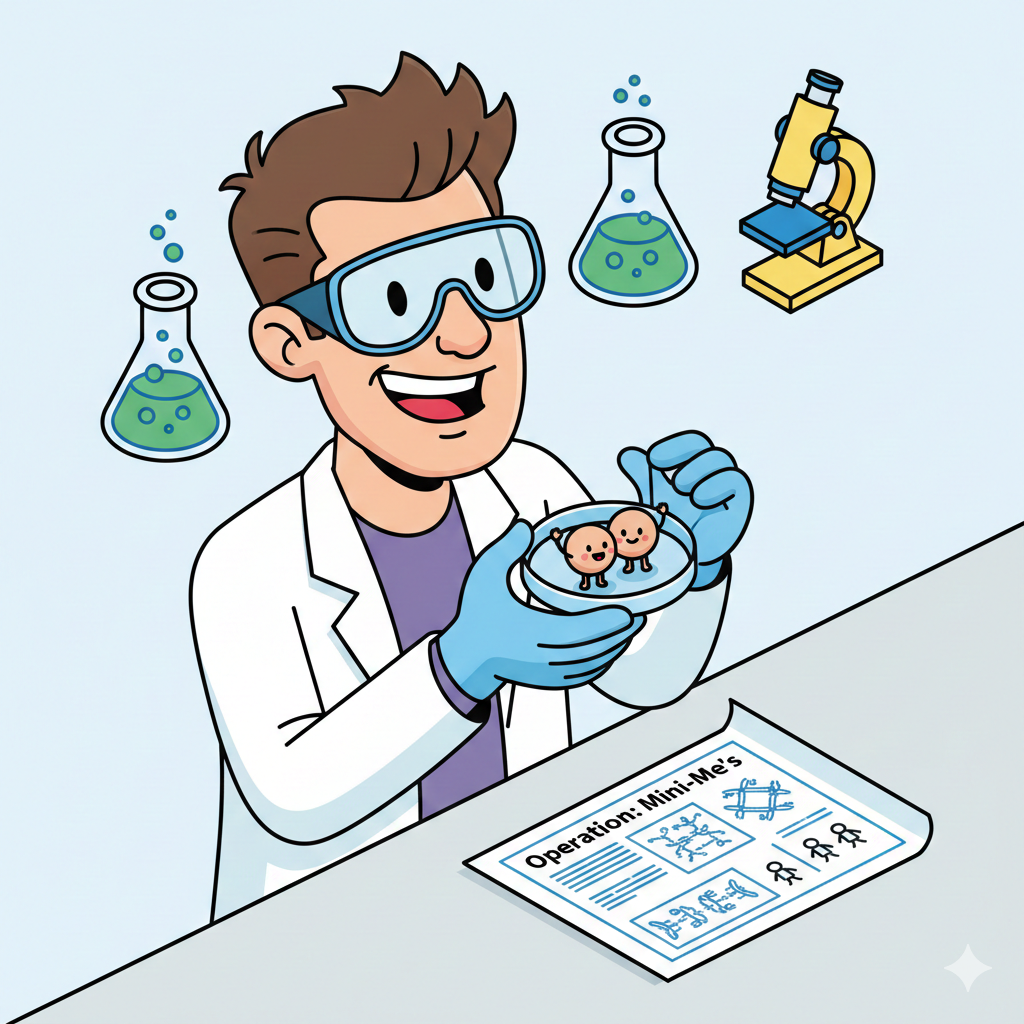
In a breakthrough that sounds like it’s straight out of a sci-fi comedy, researchers at Bar-Ilan University have successfully nurtured the first-ever lab-grown artificial testicles. Forget test tubes; welcome to the age of the testicle-tube.
The scientists created these tiny biological wonders, called “testis organoids,” using real mouse testicular cells. After carefully culturing them, the mini-organs began to organize themselves and even showed signs of reaching a stage just before sperm production.
So, why grow a pair in a petri dish? It’s not for creating a mouse-dating profile. This pioneering work is a game-changer for understanding and treating male infertility. These lab-grown models provide an ethical and effective way to study how the male reproductive system develops and functions, potentially leading to new treatments for millions.
The research also opens doors for understanding the effects of pharmaceuticals on male fertility and could one day offer solutions for children undergoing cancer treatment, potentially preserving their future ability to have children.
Lead researcher Dr. Nitzan Gonen summed it up: “This is a case where thinking small could lead to some very big outcomes for human health.” It seems the future of fertility research is looking up.