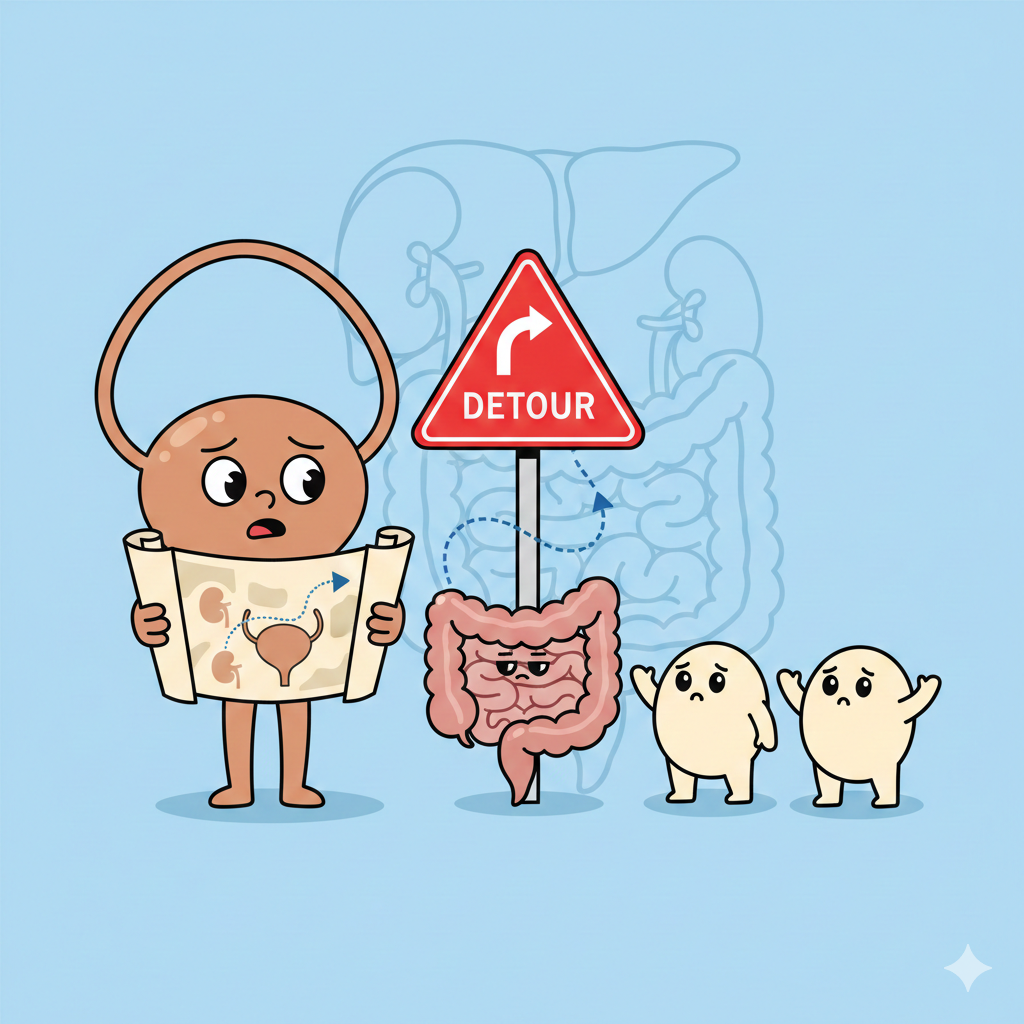
Iranian boy is born WITHOUT a penis: Baby has intact scrotum but urinates out of his anus in one in 30 million medical deformity

An Iranian boy was born without a penis, and surgeons want to make him a vagina, which is controversial.

Medically known as aphallia, the condition of the unidentified boy is so uncommon that it is thought to only occur in one in thirty million births.

In the medical literature, fewer than one hundred cases have been reported.

When his case was first reported in a journal, the boy, who was 14 months old at the time, still had two testicles and a healthy scrotum.

However, his extraordinary defect caused him to urinate through his anus.

Aphallia is a condition in which the genitalia do not develop normally during the first few months of pregnancy.

Diphallia, in which male babies are born with two penises, is caused by a similar process.

His mother, who was also not identified, said she had no issues during her pregnancy.

Doctors were able to figure out how his unique urinary system worked through special tests that were performed months after his birth.

An abnormal connection between his rectum and bladder was revealed by a special dye.

Specialists these days make young men brought into the world with aphallia a penis, in a technique known as a phalloplasty.

Doctors can also reconnect their urinary system to them by giving them a urethra.

However, in this instance, doctors said in a controversial way that gender reassignment and feminization surgery to create a pseudo-vagina are the recommended treatments.

They additionally prescribe estrogen treatment during pubescence to quell changes in his body, for example, the improvement of beard growth and the developing of the voice to adjust to his new orientation.

Despite the fact that this has historically been the treatment for aphallia, with boys being raised as girls, intersex and DSD charities have criticized this strategy because it is typically motivated by societal expectations of gender and sex rather than by medical considerations.

However, the doctors at Zahedan University of Medical Sciences did not specify whether the boy would undergo feminization surgery.

Intersex people are also boys born with aphallia.

Aphallia is thought to affect only one in every 10 million to 30 million births.

However, due to the stigma attached to the condition in some parts of the world, some experts believe that cases are underreported.

The cause of aphallia in the womb is unknown to scientists.

Related Post

A Keen Nose for Justice: North Wales Police Welcomes Viking, a Unique New Asset in the Fight Against Sexual CrimeA Keen Nose for Justice: North Wales Police Welcomes Viking, a Unique New Asset in the Fight Against Sexual Crime


In a significant boost to its investigative capabilities, North Wales Police has introduced a powerful new tool to its specialist units: a two-year-old Springer Spaniel named Viking. However, Viking isn’t a typical police dog; he is one of only a few in the UK specially trained to perform Non-Hazardous Sexual Crime Scene Searches.
Following an intensive 14-week training course, Viking and his handler, PC Ellen Wright, have joined the force’s respected Dogs Unit. Viking’s unique skill set allows him to locate crucial evidence, such as seminal fluid, in challenging environments where it might otherwise go undetected. His sensitive nose can find minute samples on a variety of surfaces, from clothing to digital devices, without compromising the integrity of the evidence.
“Viking’s introduction is a game-changer for investigating serious sexual offences,” said PC Wright. “His ability to pinpoint specific biological evidence will greatly assist our investigators, ensuring vital forensic material is collected efficiently and effectively. This not only strengthens our cases but, most importantly, helps us seek justice for victims.”
The deployment of a dog like Viking offers several advantages. It can accelerate the initial search phase of an investigation, allowing forensic teams to focus their analysis more precisely. This can lead to faster suspect identification and relieve some of the anxiety for victims awaiting developments in their cases.
Inspector Duncan Thomas of the Force’s Dogs Unit highlighted the strategic importance of this addition. “The Dogs Unit continually evolves to meet policing needs. Viking brings a rare and highly targeted capability to North Wales. His success during training was outstanding, and we are confident he will make a substantial difference in supporting some of our most vulnerable victims.”
Viking’s role exemplifies the innovative approaches modern police forces are adopting. By leveraging the unique abilities of animals, North Wales Police aims to enhance its forensic capabilities and build stronger, more robust cases against perpetrators of sexual crime.

Pakistani man needs 18 cm long electrical wire pulled out of his penis after it got stuck during DIY attempt to help him urinatePakistani man needs 18 cm long electrical wire pulled out of his penis after it got stuck during DIY attempt to help him urinate

A 64-year-old Pakistani man needs an 18-centimeter electrical wire pulled out of his penis because it got stuck in his urethra during a DIY attempt to help him urinate. The Pakistani man shoved the 18-centimeter wire into his urethra, but it got stuck.

He told the doctors who treated him at Karachi’s Abbasi Shaheed Hospital that he had put in the object to help him urinate.The unidentified man informed them that prior to inserting the wire inside himself, he had been experiencing pain and having trouble urinating for two months.
Doctors wrote in the journal Urology Case Reports that when they touched the wire in his penis, they could actually feel it.

An X-ray revealed that the wire had reached the man’s bladder all the way up his urethra.To examine the wire, surgeons had planned to insert a camera into the man’s urethra.

On the other hand, when he spread his meatus, they could see the hole through which urine flows.

The doctor then used forceps to manually remove the object.

This X-ray shows that the man’s wire is inside his urethra and extends all the way to his bladder. The doctor was able to use forceps to grab the tip of the wire and pull it back out of his penis. The doctor said the patient didn’t have any bleeding or injury after the wire was removed.

The authors did not specify whether the man in the most recent case had ever done so before or if it was a one-time occurrence.
They also didn’t say exactly when this happened or explain why the man was having trouble urinating in the first place.

However, they claimed that the man had not had a sexual encounter in three years.

Ol’ Wheelbarrow ScrotOl’ Wheelbarrow Scrot

A man from Battle Creek, Michigan had to undergo a 14-hour operation to remove his 80-pound scrotum due to a rare condition called scrotal lymphedema. This left him in constant pain and struggling to walk, shower, or use the toilet. The condition also prevented him from having sex with his wife for seven years.

Initially, doctors were unable to determine the cause of his condition, until he saw a TLC show titled The Man with the 132lb Scrotum and reached out to Warren’s doctor, Dr Joel Gelman, at UC Irvine Medical Centre.

In 2014, Maurer underwent a 14-hour operation involving a team of eight surgeons and 12 support staff to remove 80lbs of tissue from his scrotum and around 70lbs of fat from his stomach.

Following the surgery, Maurer was able to live a more normal life and found tasks such as walking and having sexual relations easier. Dr Gelman noted that while massive scrotal lymphedema is a rare condition, they have treated men with this condition successfully for many years.