Born Without An Anus

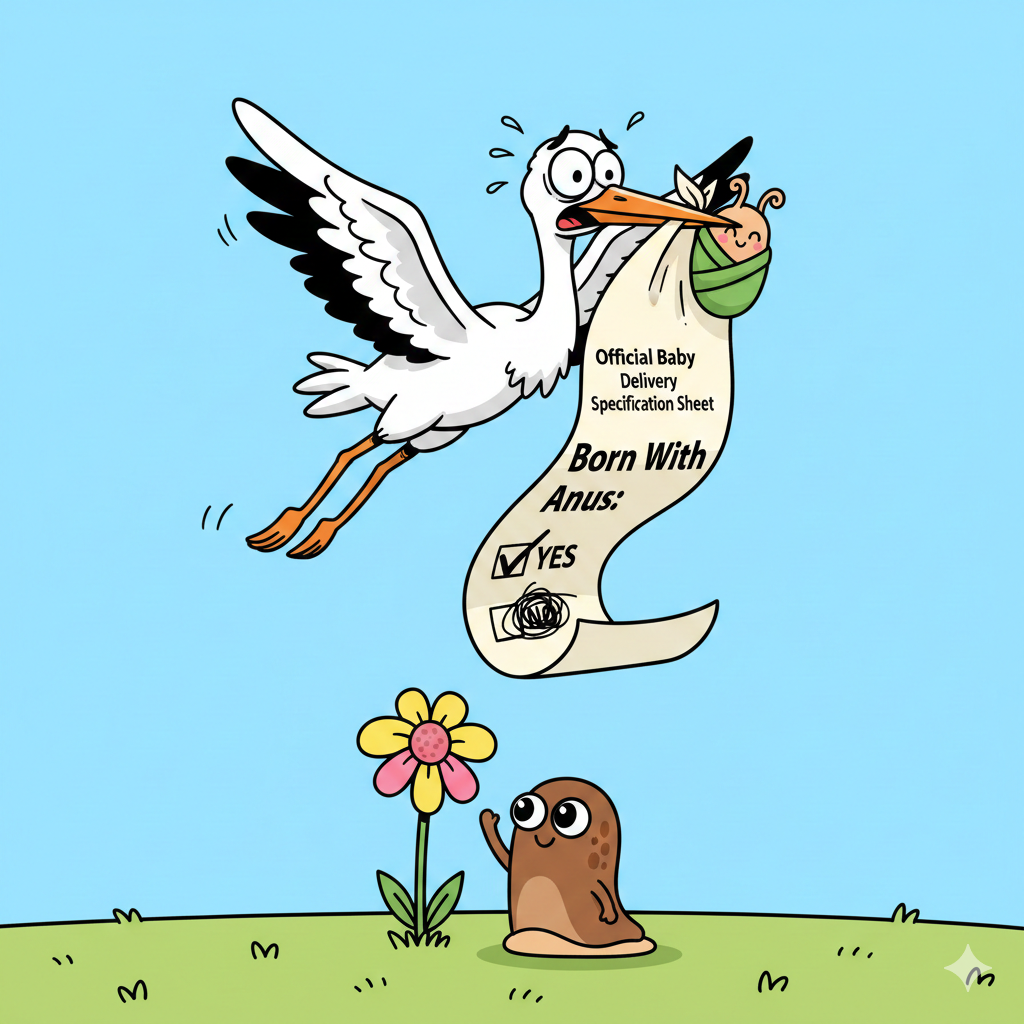
A baby boy in Pakistan was born with an incredibly rare medical condition known as diphallia, which means he has two working penises but no anus. According to a team of researchers who published their findings in the International Journal of Surgery Case Reports, the chances of being born with this condition are one in six million. Diphallia can present as complete or incomplete and is often associated with complex urological, gastrointestinal, or anorectal malformations.

The abstract of the study revealed that the boy’s penises were both normal-shaped, with one being slightly larger than the other at 2.5 cm and 1.5 cm in length, respectively. The boy had two separate urethral orifices, and both phalluses had normal-shaped glans with urethral openings located in the typical position. He had a single scrotum with two midline raphe and well-formed rouge. The boy was passing urine from both orifices, and an ultrasonography of his urological system showed two ureters and a single hemi bladder.

After being admitted to the hospital, the baby boy underwent surgery, and a sigmoid-divided colostomy was constructed. During the operation, the doctors also identified a congenital pouch colon. To enable the baby to pass stools, the doctors created an opening via a colonoscopy.

Related Post

Civil War Letter Reveals Soldier’s Taboo Addiction to MasturbationCivil War Letter Reveals Soldier’s Taboo Addiction to Masturbation

A recently surfaced 1864 letter provides a glimpse into a little-discussed affliction among Civil War soldiers – chronic masturbation.

The handwritten note by Confederate Lt. William Dandridge Pitts inquires about the condition of his brother Charles, who was discharged from the army in 1862 due to an unspecified “illness.” Charles was residing at the Western Lunatic Asylum in Virginia.

According to Charles’ doctor and accounts from fellow soldiers, his illness was a relentless addiction to masturbation. “I have had some conversation with the physician who attended my brother previous to his going to the asylum,” Lt. Pitts wrote, “and he advises me…that [Charles] was addicted to masturbation, while in camp.”

The letter highlights the mental health toll of the war, even before combat began. Soldiers forced to endure their comrades’ “self-pollution” no doubt developed deep psychological scars.

While masturbation remained taboo in the Victorian era, it was pervasive enough in the military to earn the nickname “Johnny Reb.” The irony of this affliction among troops from Virginia, the “state for lovers,” was surely not lost on the Pitts family.

The letter survives in excellent condition despite its delicate subject matter. This “director’s cut” offers intimate insight into secret struggles in Civil War ranks.

Home care worker puts penis in resident’s mouth for ‘comfort’Home care worker puts penis in resident’s mouth for ‘comfort’

A court has heard that a care home worker sexually assaulted a vulnerable resident in order to “comfort” her.

The accused, Samuel Shaheen, reportedly repeatedly kissed the woman, touched her breasts and buttocks, and inserted his penis in her mouth while assuring her that it was their “little secret.” According to prosecutor Ian Wright, Shaheen, who was a qualified nurse in his home country, was working as a care assistant at a residential home in Neath Port Talbot when he committed the acts. He allegedly carried out the sexual assaults on multiple occasions, with the victim being a woman with various physical and psychiatric health issues.

The court was told that the 46-year-old carer instructed the woman not to tell anyone about their secret and showed her photographs of his wife and children in Pakistan. Shaheen said that his wife was his “number one” but the victim was his “number two.”

The victim did not report the abuse for some time but eventually went to the care home manager, and the police were notified. Shaheen was arrested at his sister-in-law’s house in Newport and admitted to the sexual acts in interviews, claiming that they had been consensual. He then said that he had been acting out of kindness in providing “comfort” to the woman with his kissing and touching.

In an impact statement read to the court, the victim said that the abuse had left her feeling like she could no longer trust anyone, and she believed the experience had worsened her mental health.

Judge Christopher Vosper KC found that Shaheen had groomed the woman and taken advantage of her to carry out sexual acts. He also noted that the victim had been too afraid to report the abuse. The judge expressed concern about Shaheen’s lack of appreciation for the severity of his actions and the possibility of future offenses.

Shaheen was sentenced to four years in prison, with a one-third discount for his guilty pleas. He will serve up to half that period in custody before being released on license to serve the remainder in the community. He will also be on the sex offenders register for the rest of his life and subject to an indefinite sexual harm prevention order. The judge warned that Shaheen might be detained in an immigration center when he is released halfway through his sentence.

Do Men Buy Flashy Cars to Overcompensate? Study Finds Truth in Old StereotypeDo Men Buy Flashy Cars to Overcompensate? Study Finds Truth in Old Stereotype

Do Men Buy Flashy Cars to Overcompensate? Study Finds Truth in Old Stereotype

A new study suggests there may be some truth to the old stereotype that men buy flashy sports cars to compensate for lacking in other areas. Researchers at a London university set out to explore if feelings of inadequacy about penis size motivate men to seek out symbols of virility like sports cars.

The team manipulated participants’ perceptions of their manhoods by presenting misleading information intended to make some men feel below average in endowment. These men were then more likely to express interest in buying a sports car, suggesting they may use conspicuous consumption to boost self-esteem.

The effect was strongest among men over 29, who showed statistically significant increased desire for sports cars after receiving small penis misinformation. The study indicates that age impacts mating strategies, with older men more motivated to showcase status to overcome perceived inadequacies.

This builds on earlier research finding sports cars help men attract dates but don’t necessarily signal long-term partner potential. The authors suggest further study into whether other luxury items similarly compensate for male insecurities.

Of course, flashy cars likely provide an ego boost regardless of the driver’s anatomy. But this study sheds light on the deep-seated psychology potentially at play for midlife men gripped by sports car fever. While pop culture has long joked about compensation, this research suggests a real link between feelings of inadequacy and conspicuous consumption.