Crack That Cock

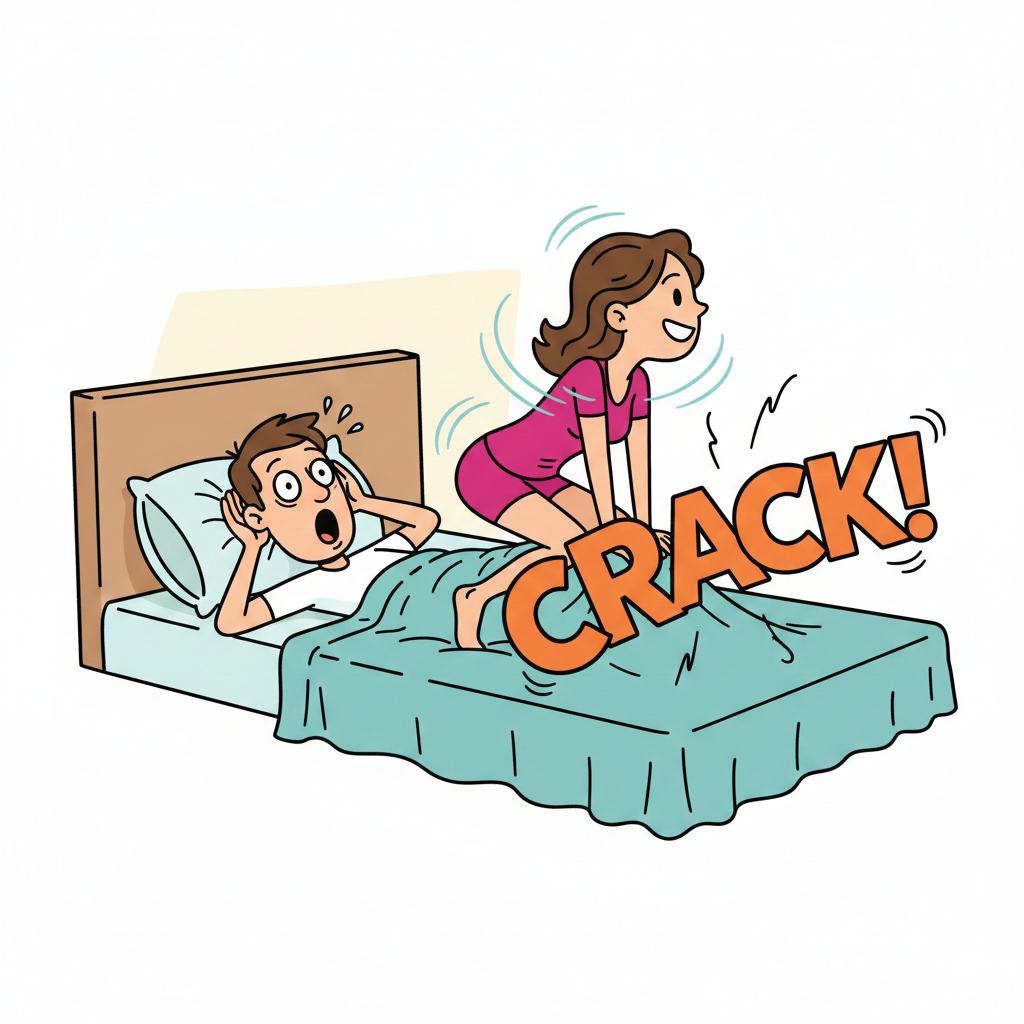
During “vigorous” sex with his wife, an Indonesian man snapped his penis.
While his lover was in the cowgirl position, the 44-year-old Bali man heard “a crack,” which was followed by excruciating pain.

When his penis slipped out while she was on top of him, she fell on top of it with her perineum, which is the area between her vagina and anus.

His erection ended right away, and horrifying images show his penis hanging at an angle.
After waiting three hours before going to the hospital, the unidentified man became concerned when his penis began to swell and blood began to leak from the tip.

To examine the injuries, doctors were forced to “de-glove” his penis, which means peeling off the skin.
They discovered a one-inch (3 cm) fracture in the spongy tissue that swells with blood during an erection in the shaft of the penis. Additionally, he broke his urethra.
Sanglah General Hospital doctors wrote about the incident in the International Journal of Surgery Case Reports.

Penis fractures are uncommon injuries that necessitate immediate treatment when they do occur.
It usually takes place during sex, and the most common positions are “doggy style,” in which the man is behind the woman, and “cowgirl.”

The man went to the emergency room shortly after the accident, where doctors inserted a thin, flexible camera into his penis to look at the damage.

The man’s urethra, the tube inside the penis that allows urine to leave the body, was ruptured, they discovered.

After degloving the penis, they rushed him to surgery and discovered the fracture.
The man was given an erection using drugs to ensure that no blood would leak out after the break was stitched back together, and his penis was carefully bandaged.

Following a 21-day time span, the 44-year-old purportedly made a full recuperation and had the option to keep an erection and pee regularly.

One of the doctors who treated the man, urologist Dr. Muhlis Yusuf, said that different sexual positions could cause penis fractures.

They wrote in the case report, “‘ Doggy style was the most common vigorous sexual position.
‘Another concentrate likewise revealed that penile crack generally happens assuming the lady is in a predominant position.’

Dr. Yusuf went on to say that men’s embarrassment over the injury might cause them to delay seeking treatment, which could make these kinds of injuries worse.

The man’s injuries were not detailed by the medical professionals.

Although the man made a full recovery and was able to have sex again without pain, the case report did not specify whether he was given antibiotics or painkillers during his recovery.

It likewise didn’t make sense of if the stiches the man was given during his medical procedure were dissolvable or they should have been taken out sometime in the future.

Related Post

Shocking Ultrasound Reveals Microscopic Worms in Man’s Scrotum: Unearthing a Rare InfectionShocking Ultrasound Reveals Microscopic Worms in Man’s Scrotum: Unearthing a Rare Infection

A disturbing video captures the moment when an ultrasound examination uncovered minuscule worms wriggling inside a man’s scrotum. The 26-year-old individual, hailing from New Delhi, India, sought help at a sexual health clinic due to discomfort and swelling in his right testicle.

To the astonishment of doctors, the ultrasound revealed the presence of “linear structures in motion” within a narrow tube responsible for transporting fluid and white blood cells in the scrotum. The patient, who remained unnamed, received a diagnosis of lymphatic filariasis and was prescribed a three-week course of an anti-parasitic medication. Upon his return, the worms had vanished.

This unsettling case follows a previous incident in which a Venezuelan man sought medical attention after claiming that thieves inserted a beer bottle into his rectum.

Dr. Amit Sahu, a senior medical consultant at Max Super Speciality Hospital who examined the patient, noted that the ultrasound displayed “the undulating movements of live worms.” These worms had migrated into the lymphatic system, leading to dilation and dysfunction of the channels.

Further examination involved the extraction of fluid from the scrotum, which, when examined under a microscope, also revealed a multitude of live worms scientifically known as Wuchereria bancrofti, thus confirming the diagnosis. The patient was subsequently treated with diethylcarbamazine, a potent anti-parasitic drug effective against the worms.

Upon returning for a follow-up three weeks later, another ultrasound confirmed the absence of the worms, and the patient experienced a full recovery.

Lymphatic filariasis infections are typically transmitted through mosquito bites, as these insects transfer the parasites into the bloodstream. Once in the bloodstream, the worms travel into the lymphatic system, a network designed to drain fluid, eventually reaching various parts of the body, including the scrotum.

Within the lymphatic system, these parasites mature, reproduce, and release millions of offspring. Usually, these worms do not trigger any noticeable symptoms. However, in certain cases, damage to the lymphatic system leads to fluid accumulation in the legs, resulting in lymphedema. In more severe instances, characterized by substantial limb swelling, individuals are diagnosed with elephantiasis. In men, the presence of these parasitic worms can lead to genital swelling, which, in extreme cases, causes disfigurement and mobility problems.

The primary treatment for this disease involves antiparasitic medications. Lymphatic filariasis infections are relatively common in tropical and subtropical regions, including parts of Africa, Asia, and South America. These infections are not present in the United States or the United Kingdom.

The Centers for Disease Control and Prevention (CDC) emphasize that individuals need to be repeatedly bitten by infected mosquitoes over several months to contract the infection. Short-term tourists have a very low risk of infection. However, people residing in tropical or subtropical areas where the disease is prevalent face the greatest risk.

The World Health Organization (WHO) classifies lymphatic filariasis as a neglected tropical disease. Estimates suggest that over 50 million people worldwide are infected with this disease. Nevertheless, the WHO asserts that the disease could be eradicated if annual doses of anti-parasitic drugs were distributed to at-risk regions.

Religious Leader Claims Beards Are a Moral Safeguard Against ‘Indecent Thoughts’Religious Leader Claims Beards Are a Moral Safeguard Against ‘Indecent Thoughts’

A religious leader has sparked debate by stating that men who are clean-shaven may inadvertently cause “sinful and indecent thoughts” in others, arguing that facial hair is a God-given feature meant to distinguish gender and promote modesty.
The comments were made by Pastor Gary Mooibroek of the Reformed Congregation in the Netherlands. In a sermon, he suggested that a beard serves as a natural barrier to immoral thinking. He posited that the act of shaving removes a divine distinction between men and women, potentially leading to confusion and temptation.
“God gave men beards for a reason,” Mooibroek stated. “It is a clear sign that he is a man. When a man shaves his beard, he removes that sign. This can lead to sinful thoughts, because the clear distinction is blurred.”
The sermon, which circulated online, has drawn a mix of reactions. Some within his congregation have supported the view, seeing it as an extension of their faith’s emphasis on clear gender roles and modest appearance. However, critics have labeled the remarks as archaic and potentially harmful, arguing that they promote superficial judgments and place an unreasonable burden of responsibility on men for the thoughts of others.
This is not the first time conservative religious interpretations of appearance have made headlines. Similar discussions have arisen regarding standards of dress for women. Mooibroek’s comments highlight the ongoing tension between traditional religious beliefs concerning physical appearance and modern societal norms.

GP Suspended for Adding His Own Semen to a Colleague’s CoffeeGP Suspended for Adding His Own Semen to a Colleague’s Coffee

A doctor from Wales has been suspended from the medical register after a tribunal found he contaminated a female colleague’s coffee with his own semen.

The incident involved Dr. Nicholas Chapman, 43, a general practitioner at the Cwmcarn Primary Surgery in Caerphilly county. The Medical Practitioners Tribunal Service (MPTS) heard that in August 2021, Dr. Chapman entered the staff kitchen and ejaculated into a travel mug belonging to a female GP colleague.

The victim reportedly drank from the mug and noticed an “unusual” taste and consistency. Suspicious, she discreetly secured the mug for forensic testing. The results confirmed the presence of semen, and DNA analysis later identified Dr. Chapman as the source.

Dr. Chapman denied the allegation, claiming he had only spat into the mug. However, the tribunal rejected this explanation as “implausible and untrue,” stating that his actions were “deplorable and a significant breach of trust.”

The tribunal concluded that Dr. Chapman’s actions were sexually motivated and amounted to misconduct. While they determined his fitness to practice was not currently impaired, they issued a six-month suspension, citing the need to maintain public confidence in the medical profession and declare such behaviour unacceptable. This suspension will be reviewed before it expires. The case has been reported to South Wales Police.