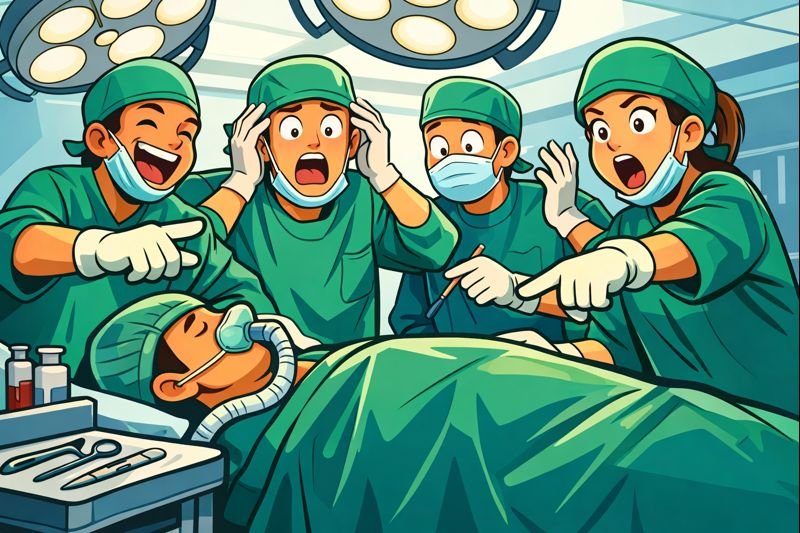
In a groundbreaking medical milestone, a team of surgeons at Massachusetts General Hospital has successfully performed the United States’ first penis transplant, offering a profound new hope for a patient whose life was irrevocably changed by cancer.
The recipient, a 64-year-old man from Halifax, Massachusetts, underwent a 15-hour procedure in mid-May. The transplant was not for erectile dysfunction, but to reconstruct his genitals after a life-saving surgery for advanced penile cancer several years prior. The amputation, while necessary, came at a significant psychological cost, leaving him with deep feelings of incompleteness and isolation.
“For this patient, it was about restoring a fundamental part of his identity,” explained Dr. Curtis Cetrulo, a leading member of the transplant team. “We are venturing beyond simply saving lives into the realm of restoring a sense of normalcy and wholeness.”
The procedure is exceptionally complex, requiring the meticulous reconnection of tiny nerves, blood vessels, and tissue from a deceased donor. The ultimate goal is for the patient to regain not only the physical appearance but also urination function and sexual sensation. The medical team is cautiously optimistic, citing the success of a similar, smaller-scale surgery performed in South Africa in 2014.
The patient, who has chosen to remain anonymous to protect his privacy, expressed immense gratitude. His hope is simple yet powerful: to one day regain a “normal life.” For him, success would mean the ability to urinate standing up and to feel whole again, both physically and emotionally.
This transplant represents more than a single patient’s journey; it opens a new frontier in reconstructive surgery. The team at Mass General believes this procedure could eventually help other men who have suffered severe genital trauma from accidents on the battlefield, car crashes, or other cancers.
The road to recovery is long, requiring extensive monitoring to prevent organ rejection and intensive physical therapy. But for the first man in the U.S. to undergo this pioneering procedure, it is a path he walks with renewed hope, symbolizing a powerful step toward healing the visible and invisible scars of disease.